Power splitters
A power splitter divides the signal equally between two, three or four outputs. Equal splitting is the choice when every antenna branch needs the same power, for example where a trunk line branches into the wings of a floor. Together with tappers, splitters are the backbone of an in-building network: where branches need different power levels, use a tapper (asymmetric power splitter).
BDC power splitters cover 380–3800 MHz, from VIRVE/TETRA to the 5G mid-bands, and handle 400 W average power. The range has 2-, 3- and 4-way models plus a riser-type 2-way splitter. Every model has 4.3-10 female connectors.
Split loss grows with the number of outputs; per-model insertion loss is in the comparison table below. Return loss is ≥ 21 dB and PIM ≤ −160 dBc on every model, both stated as guaranteed minimums – not typical values.
Updated · Bandercom Oy
Guide: Tapper or power splitter?
Key specifications compared
| Model | Frequency range | Insertion loss | Return Loss | PIM | Total input power | Ingress protection |
|---|---|---|---|---|---|---|
| BX-PS-02-43F 2-Way Power Splitter | 380–3800 MHz | ≤ 3.3 dB | ≥ 21 dB · typ. 23 dB | ≤ −160 dBc · typ. −163 dBc IM3, 3rd order @ 900 MHz, 2 × 20 W | 400 W | IP65 |
| BX-PS-03-43F 3-Way Power Splitter | 380–3800 MHz | ≤ 5.3 dB | ≥ 21 dB · typ. 23 dB | ≤ −160 dBc · typ. −163 dBc IM3, 3rd order @ 900 MHz, 2 × 20 W | 400 W | IP65 |
| BX-PS-04-43F 4-Way Power Splitter | 380–3800 MHz | ≤ 6.6 dB | ≥ 21 dB · typ. 23 dB | ≤ −160 dBc · typ. −163 dBc IM3, 3rd order @ 900 MHz, 2 × 20 W | 400 W | IP65 |
| BX-PSR-02-43F 2-Way Power Splitter, Riser-Type | 380–3800 MHz | ≤ 3.3 dB | ≥ 21 dB · typ. 22 dB | ≤ −160 dBc · typ. −163 dBc IM3, 3rd order @ 900 MHz, 2 × 20 W | 400 W | IP65 |
Products
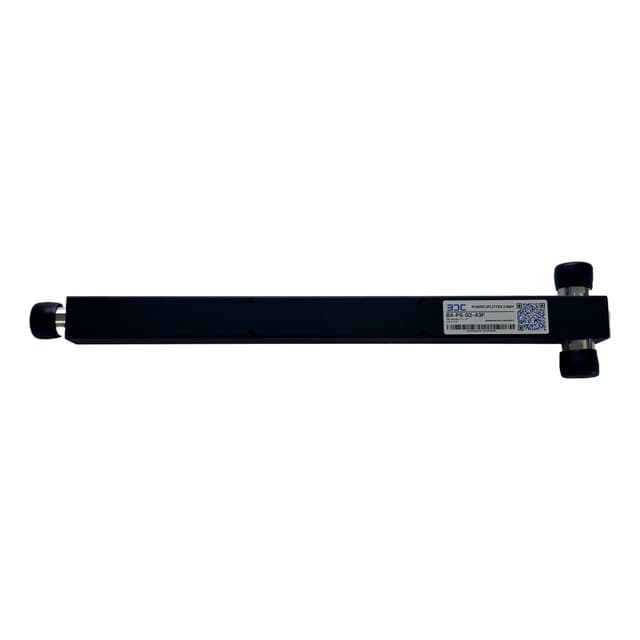
BX-PS-02-43F
2-Way Power Splitter
Two-way power splitter for symmetric network distribution, frequency range 380–3800 MHz.
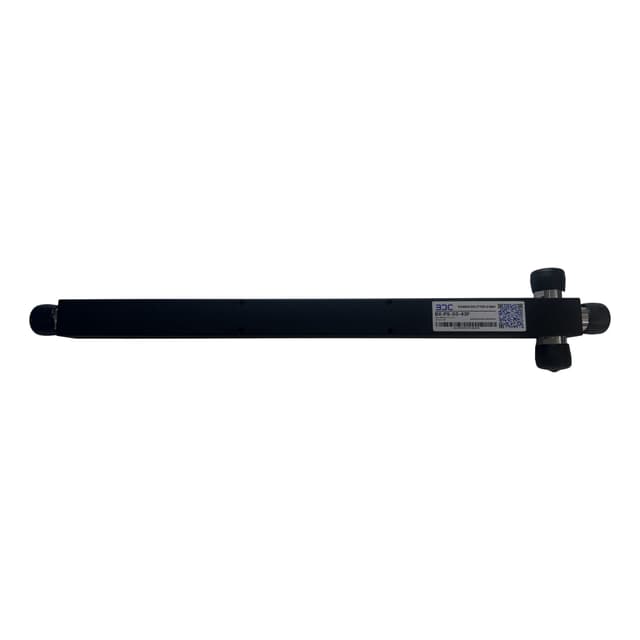
BX-PS-03-43F
3-Way Power Splitter
Three-way power splitter for symmetric network distribution, frequency range 380–3800 MHz.